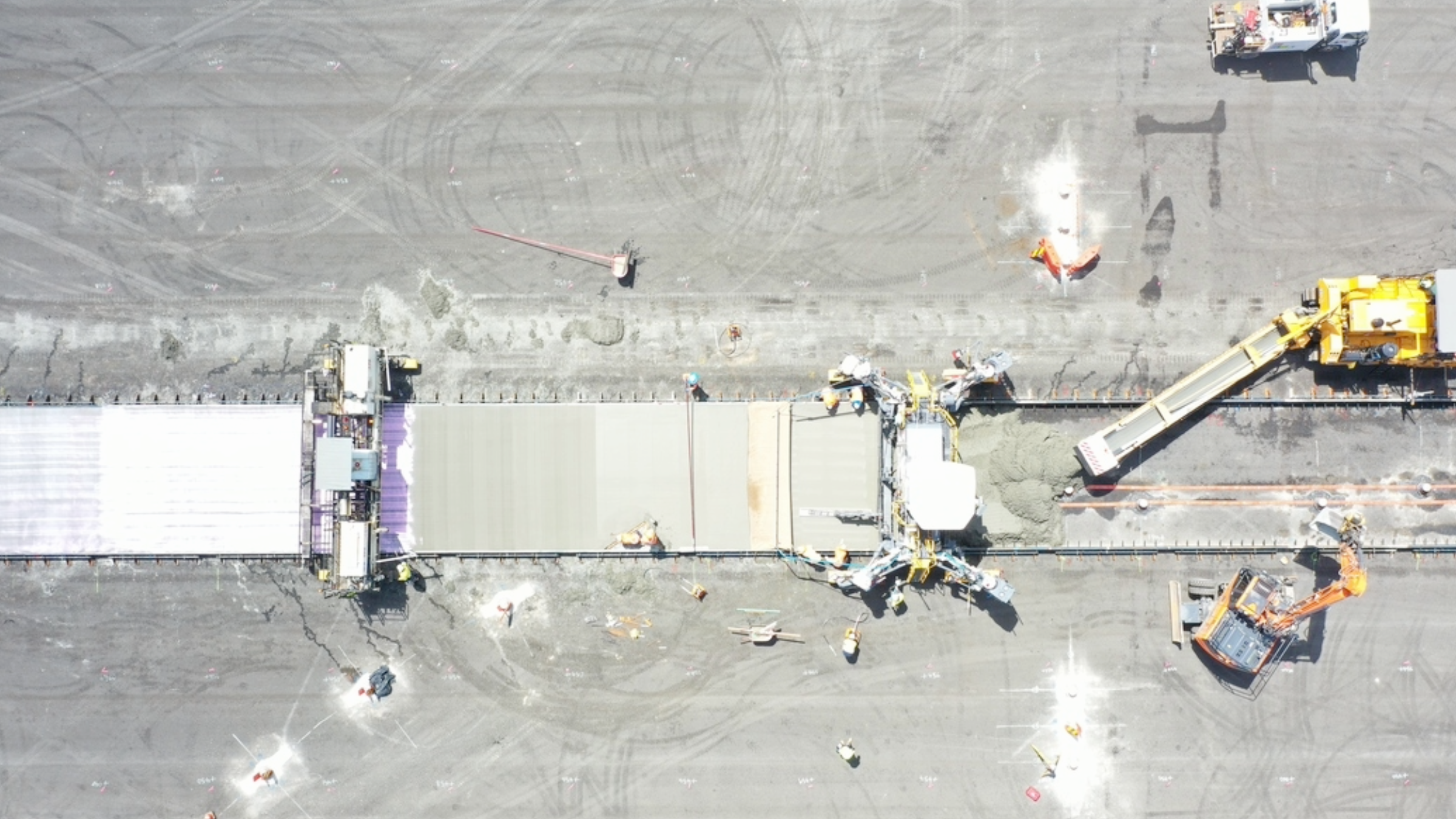
The Western Sydney International (Nancy-Bird Walton) Airport (WSI) Airside Civil and Pavement Works (ACP) project has achieved an outstanding final Infrastructure Sustainability Council (ISC) As Built score of 92.71 points, earning a Leading rating and reinforcing the project and CPB Contractors' position as leaders in sustainable infrastructure delivery.
Delivered by the CPB Contractors ACCIONA Joint Venture for WSI, the ACP package involved the design and construction of critical airside infrastructure, including the runway, taxiways, aircraft pavements, airfield roads, drainage systems, lighting systems and supporting utilities that will underpin the operation of Sydney's newest 24-hour international airport.
The verified result reflects the team's commitment to embedding sustainability into every stage of project delivery, achieving strong performance across climate change adaptation, energy and carbon management, water stewardship, materials efficiency, waste diversion, stakeholder engagement, community outcomes and innovation.
What makes this achievement particularly significant is the environment in which it was delivered. As critical airport infrastructure, the ACP package was governed by highly prescribed aviation specifications, stringent safety requirements and uncompromising quality standards. Despite limited flexibility to modify designs, materials and construction methodologies, the team successfully identified and implemented initiatives that improved sustainability outcomes while maintaining the rigorous performance requirements expected of a world-class airport.
Driving innovation in a highly specified environment
A standout contributor to the project's success was its commitment to innovation.
Among the project's most notable achievements was the delivery of an Australian-first slipform paving initiative, which was independently recognised by the Infrastructure Sustainability Council as an Australian-first innovation.
The initiative demonstrated how innovative construction techniques can improve sustainability outcomes while continuing to meet the demanding quality, durability and operational requirements of airport infrastructure. The recognition highlights the team's willingness to challenge traditional approaches and find new ways to create value, even in one of the most highly specified construction environments in Australia.
The project also received recognition for several other pioneering sustainability initiatives, including:
- Australian-first: Slipform paving innovation
- Australian-first: Vital Super Clear Extra
- NSW First: Biogenic bitumen
- Supply sustainable supply chain initiative
Together, these initiatives showcase how the team successfully balanced sustainability, innovation and quality to deliver long-term benefits for the project and the broader infrastructure industry.
Sustainability outcomes that leave a lasting legacy
The team also demonstrated leadership in climate resilience, achieving high levels of performance in climate change adaptation while ensuring WSI's critical infrastructure is prepared for future environmental challenges. The project delivered outstanding results in water conservation, materials efficiency, sustainable procurement and waste management, including significant diversion of waste from landfill.
Importantly, these outcomes were achieved without compromising the safety, quality or performance requirements of the infrastructure, reinforcing that sustainability excellence can be delivered alongside world-class engineering and construction practices.
The result further demonstrates our commitment and ability to creating lasting environmental, social and economic value on some of Australia's most complex projects.
Monisha Kamalesh, Sustainability Coordinator, said the result reflected the innovation, determination and collaboration of the entire project team.
"Achieving an Infrastructure Sustainability Council rating of Leading, with a score of 92.71 points, was a feat only made possible by the collective mindset of this team to continually improve, innovate, and imbed sustainability into all aspects of delivery.
"Strong targets were set from the outset, and collaboration and a dedication to sustainability ensured that we exceeded these targets. Design optimisation and construction efficiencies ensured that our scope 1 and 2 emissions were reduced by 18%, while water consumption was reduced by 52%.
"Beyond resource reduction, we championed two Australian first innovations and a state first innovation which have introduced sustainable construction methodologies and products, thereby leaving a legacy that will change the industry for the better."
Congratulations to everyone involved in achieving this remarkable milestone and for helping set a new benchmark for sustainable infrastructure delivery.